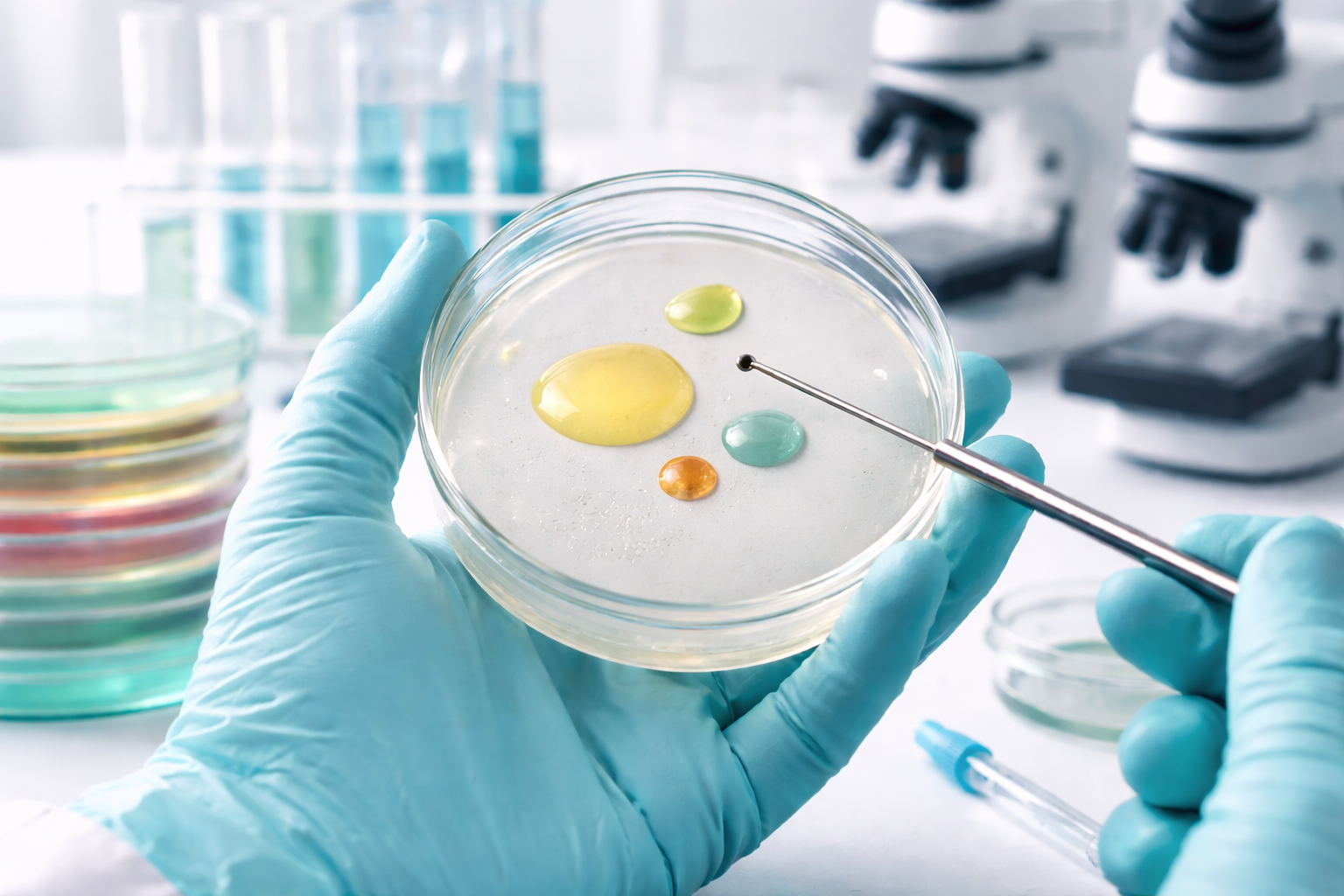
MICROBIOLOGY TEST
When placing a cosmetic product on the EU market, safety is not just about choosing the right ingredients — it is about proving that the final product is safe under normal and reasonably foreseeable conditions of use.
Key checks include:
- preservative efficacy / challenge testing (please see: CHALLENGE TEST – Cosmeting),
- total microbial count,
- absence of pathogens,
- packaging suitability to prevent contamination.
Microbiological testing is essential to ensure that a cosmetic product remains safe throughout its shelf life and during consumer use. According to the SCCS Notes of Guidance and ISO standards, the following parameters should be evaluated:
1. Total Microbial Count
This checks the overall level of microorganisms present in the product:
- Total Aerobic Mesophilic Microorganisms (TAMC)
- Total Yeasts and Moulds Count (TYMC)
Typical acceptance limits depend on product category:
- Category 1 products (for children under 3, eye area, mucous membranes): stricter limits
- Category 2 products (all other products): standard limits
2. Absence of Specified Pathogens
Cosmetic products must be free from harmful microorganisms such as:
- Staphylococcus aureus
- Pseudomonas aeruginosa
- Candida albicans
- Escherichia coli
It is also important to note that not every cosmetic product requires full microbiological testing. Low-risk products may justify a reduced testing approach based on a proper risk assessment. Please see: LOW-RISK COSMETIC PRODUCTS – Cosmeting
Photo: ChatGPT