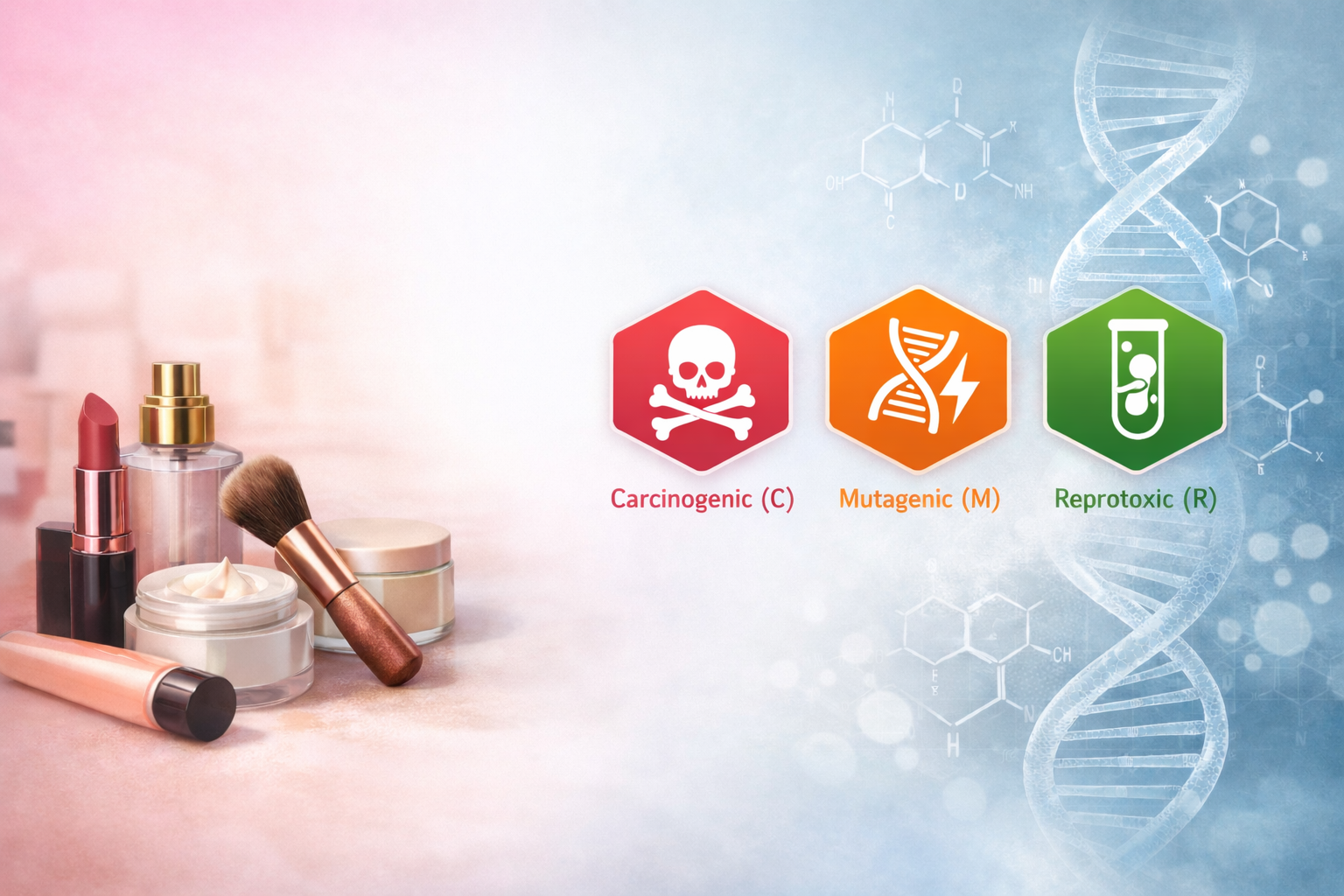
CMR SUBSTANCES
When choosing cosmetic products, safety is a key concern. One important topic in cosmetic regulation is the use of CMR substances, a group of chemicals that may pose long-term health risks.
CMR stands for:
- Carcinogenic (C) – substances that may cause cancer
- Mutagenic (M) – substances that may cause genetic mutations
- Reprotoxic (R) – substances that may harm fertility or unborn children
These substances do not always cause immediate or visible reactions. In many cases, prolonged or repeated exposure can be harmful without the user realizing it.
How CMR Substances Are Classified
CMR substances are classified under the CLP Regulation (EC) No. 1272/2008, which governs the classification, labelling, and packaging of chemicals in the European Union. Based on scientific evidence, they are divided into 3 categories:
- CMR 1A: Substances with proven harmful effects in humans
- CMR 1B: Substances presumed to have harmful effects based on animal studies
- CMR 2: Substances suspected of having CMR properties
CMR Substances and EU Cosmetic Law
The European Cosmetics Regulation (EC) No. 1223/2009 is one of the strictest cosmetic regulations in the world. Its main goal is to protect consumer health. As a general rule, CMR substances are banned from cosmetic products in the EU. However, there are a few carefully controlled exceptions.
- CMR Category 2 substances may be allowed if they are evaluated by the Scientific Committee on Consumer Safety (SCCS) and considered safe under specific conditions of use.
- CMR Category 1A and 1B substances are only permitted in very rare cases. This requires a positive safety assessment by the SCCS, evidence that the substance is safe for use in food, and proof that no suitable alternative is available.
A Continuously Updated System
The list of CMR substances is not fixed. European authorities regularly review new scientific data to identify potential health risks. Updates are made through Adaptations to Technical Progress (ATP), which align regulations with the latest scientific knowledge. The most recent update is included in Commission Regulation (EU) 2026/78.
Why This Matters
These strict rules help ensure that cosmetic products on the EU market are safe for everyday use. By continuously monitoring and updating regulations, authorities aim to reduce long-term health risks and maintain a high level of consumer protection.