THE MOST COMMON PLASTIC COSMETIC PACKAGING TYPES & WHY COMPATIBILITY TESTING MATTERS
Plastic packaging plays a key role in the cosmetics industry due to its lightweight design, functionality, and versatility. However, packaging is not only a marketing or technical consideration. With the new EU Packaging and Packaging Waste Regulation (PPWR), packaging must also meet increasing sustainability and recyclability expectations.
At the same time, packaging compatibility testing remains an essential part of cosmetic product development and safety assessment before placing products on the market.
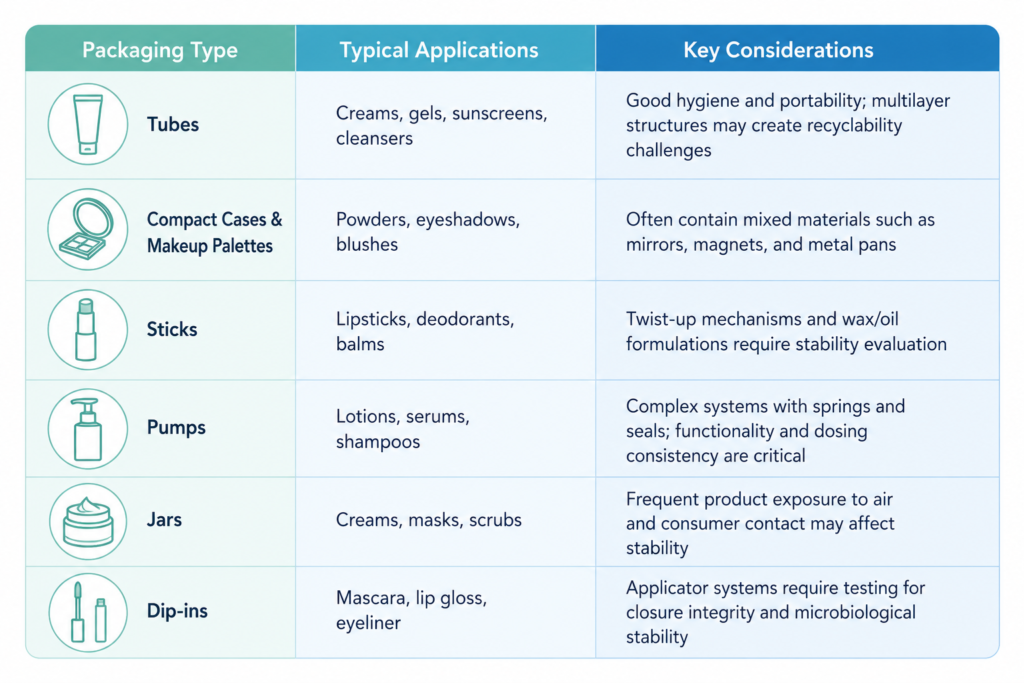
Common plastic cosmetic packaging types
PPWR and cosmetic packaging
The Packaging and Packaging Waste Regulation (PPWR) introduces stricter requirements for packaging placed on the EU market, including:
- packaging minimisation,
- improved recyclability,
- increased use of recyclable or recycled materials,
- conformity obligations for packaging manufacturers and economic operators.
This is expected to significantly influence cosmetic packaging design and material selection in the coming years.
Why packaging compatibility testing is essential
Packaging compatibility testing is performed before placing a cosmetic product on the market to evaluate:
- chemical interactions,
- migration or absorption,
- discoloration,
- stress cracking,
- leakage,
- closure integrity,
- dispensing performance,
- stability under different storage conditions.
This information supports the Cosmetic Product Safety Report (CPSR) and helps demonstrate that the packaging is suitable for the intended formulation and use conditions.
With PPWR introducing stricter obligations related to recyclability, packaging minimisation, and conformity documentation, packaging selection and compatibility evaluation are becoming increasingly interconnected with both regulatory compliance and sustainability strategies.